
Consistent progress in athletics rarely comes from just training harder; it comes from training smarter and recovering effectively. Many athletes and coaches use periodization to plan macro, meso, and microcycles, but fewer factor in the body's natural daily and weekly biological cycles. Biorhythms can serve as a complementary tracking tool to help you pace your effort, prioritize recovery, and reduce the risk of overtraining.
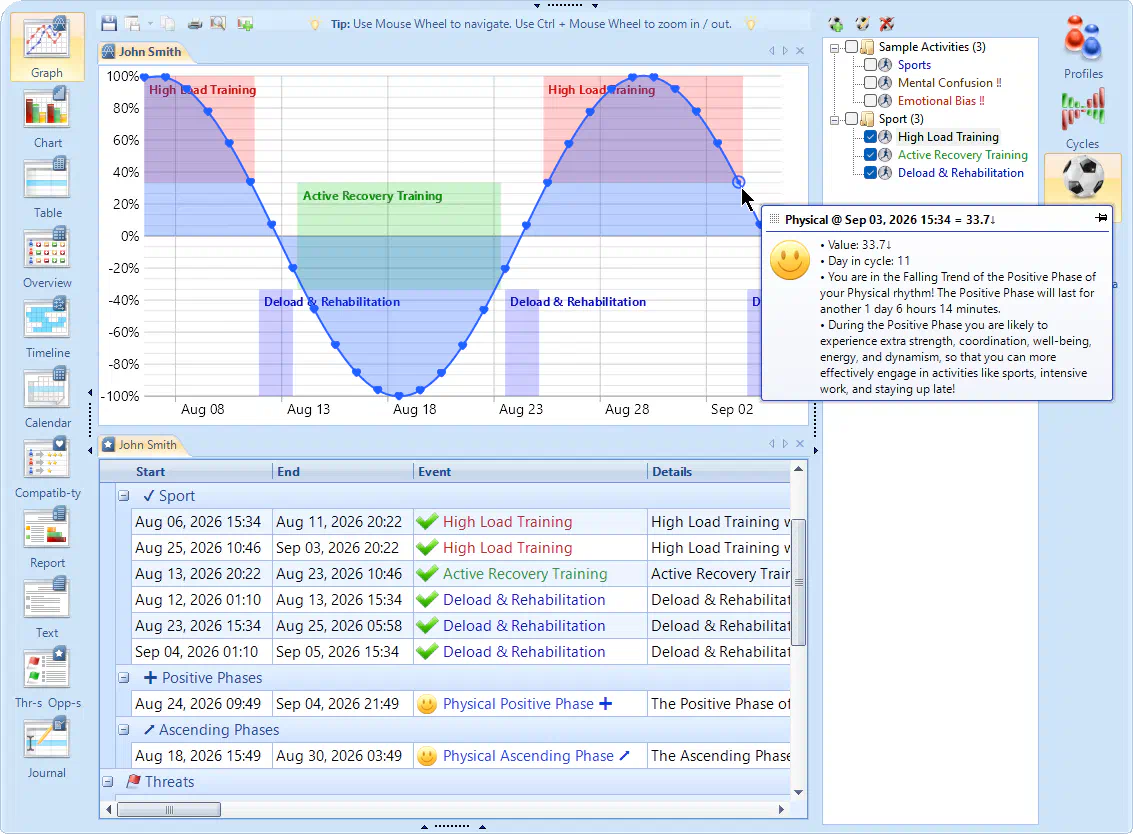
Physical Cycle in Training Context
The primary physical biorhythm follows a 23-day sine wave. During the positive phase, coordination, strength, and general energy tend to peak. The negative phase often aligns with increased fatigue or slower recovery. The transition points (critical days, zero days, minima, and maxima) can represent days of heightened vulnerability or instability, which is why many athletes prefer to schedule heavy lifts, competitions, or high-intensity sessions away from these dates.
While biorhythms don't replace sports science, they offer a consistent, mathematically predictable pattern that you can layer over your training schedule. Biorhythms Calculator makes it easy to visualize these waves and align them with your actual training load, giving you a second layer of data to inform your planning decisions.
Learn more about here: Sports Periodization and Recovery Windows
Scheduling Training Intensity with Activities
Instead of manually checking a calendar for favorable days, you can define Activities in Biorhythms Calculator that trigger based on cycle thresholds. For example, you might set a "Heavy Training Day" activity to activate when the Physical cycle is above 50%, or a "Technique & Mobility" block for when it falls between -80% and -10%. The software will highlight these periods across your preferred time range, giving you a clear visual guide for weekly planning.
Here’s how this feature translates into real-world training benefits:
- Proactive Periodization - Shift from reactive guessing to data-driven scheduling. By locking in your ideal training blocks ahead of time, you ensure every session aligns with your body’s natural energy windows rather than forcing effort during low-capacity phases.
- Targeted Injury Prevention - Automatically flag high-risk days. When the Physical cycle dips below zero or hits a critical transition, the software highlights those dates so you can swap heavy loads for mobility work or complete rest before fatigue compounds.
- Optimized Recovery Integration - Treat negative phases as active recovery windows instead of wasted days. Define specific low-intensity activities that trigger automatically, keeping your training volume consistent while respecting your biological load.
- Time-Saving Visualization - Instantly scan months of data instead of flipping through daily charts. Color-coded activity bars overlay your timeline, giving coaches and athletes a clear bird’s-eye view of optimal training blocks at a glance.
Whether you're managing a solo training block or coordinating a team's microcycle, Activities turn biorhythm patterns into a repeatable, actionable planning system.
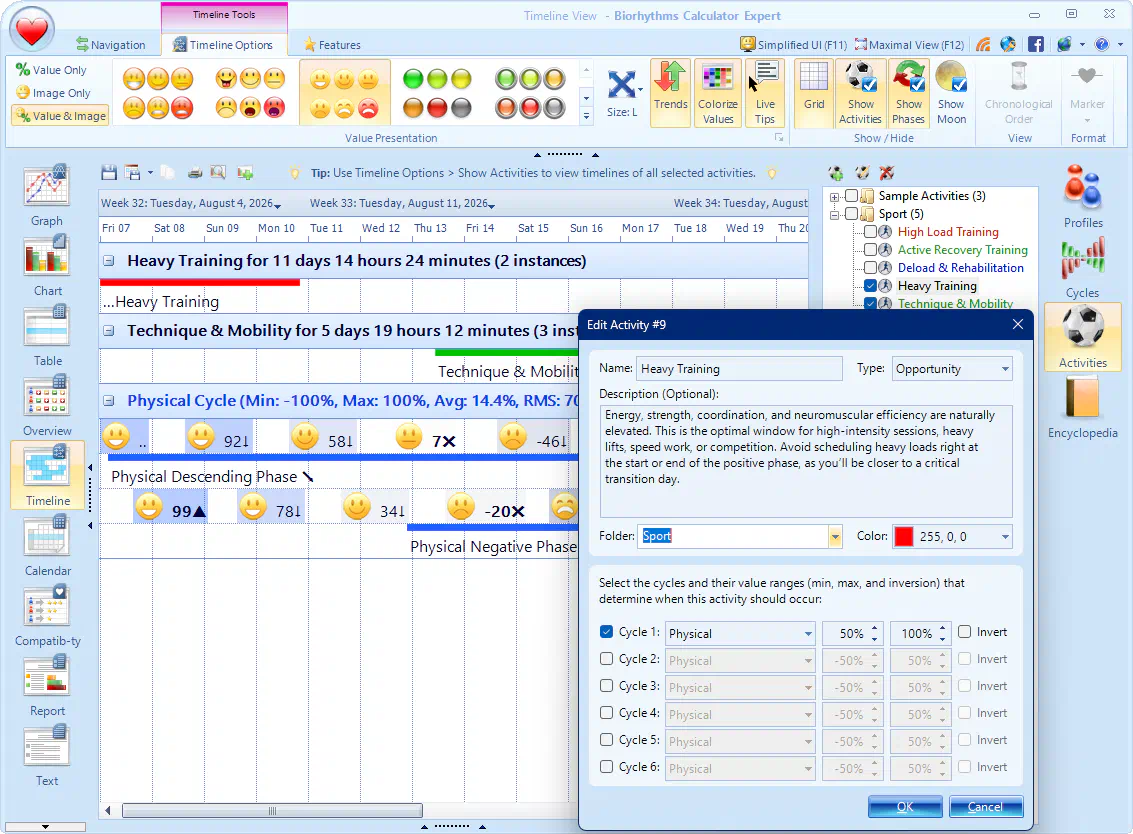
Exporting Your Training Plan to Your Calendar
Once you've mapped out your preferred training blocks, you can export them directly to your calendar application. Biorhythms Calculator generates one-time events for each defined activity within your selected date range, so you can set up a full month or an entire training cycle at once. These events are exported into industry-standard iCal file so you can sync it with Outlook, Google Calendar, or Apple Calendar, keeping your physical training schedule visible alongside meetings, travel, and other appointments.
Learn more about iCal Calendar Sync.
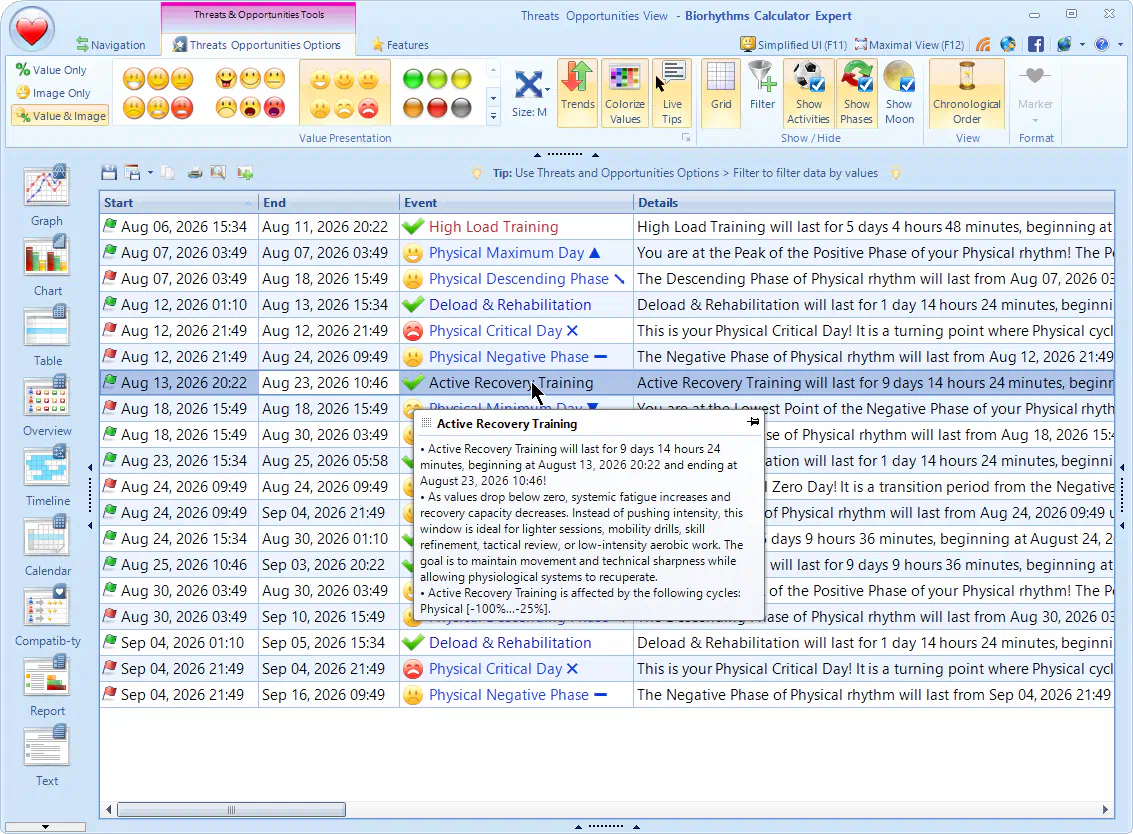
Recovery, Injury Prevention, and Critical Days
Recovery is where consistency is built. During negative physical phases, your body may require more sleep, lighter loads, or additional mobility work. Biorhythms Calculator's Threats & Opportunities View and Timeline View make it simple to spot upcoming critical days and extended negative periods. Many athletes use these time periods intentionally for deload weeks, active recovery, or injury rehabilitation, preventing minor fatigue from compounding into overtraining.
Instead of waiting for fatigue to build, use the Timeline and Threats & Opportunities views to plan your recovery windows two to three weeks in advance. When the software highlights a cluster of critical days or a prolonged negative phase, treat it as a signal to shift your training focus rather than a setback. For example, you might swap heavy compound lifts for tempo runs or technique drills, prioritize sleep and nutrition protocols, or dedicate extra time to mobility and joint stabilization work. This proactive approach helps you clear accumulated neuromuscular fatigue before it impacts performance, ensuring you transition smoothly back into your positive phase with fresh energy and reduced injury risk.
Track your Progress with Athletics Journal
Tracking your actual experience against the software's predictions can also refine your approach. The built-in Journal allows you to log daily fatigue, soreness, or performance notes manually. Over time, you can export these entries as a report to review patterns, share them with a coach, or simply observe how well your training load matched your biological rhythm.
- Calibrate Your Personal Baseline - Biorhythms provide a mathematical framework, but individual recovery rates and stress responses vary. Logging actual fatigue and soreness helps you adjust your personal thresholds and recognize what "normal" feels like for your body.
- Identify Hidden Patterns - Cross-reference your manual notes with predicted cycles to spot consistent correlations, like how emotional dips impact sleep quality or how physical lows align with specific types of joint stiffness or mental fog.
- Streamline Coach Reviews - Export structured reports instead of sharing unorganized spreadsheets. Coaches and sports researchers can quickly analyze your real-world data against predicted waves to fine-tune periodization plans and validate training load decisions.
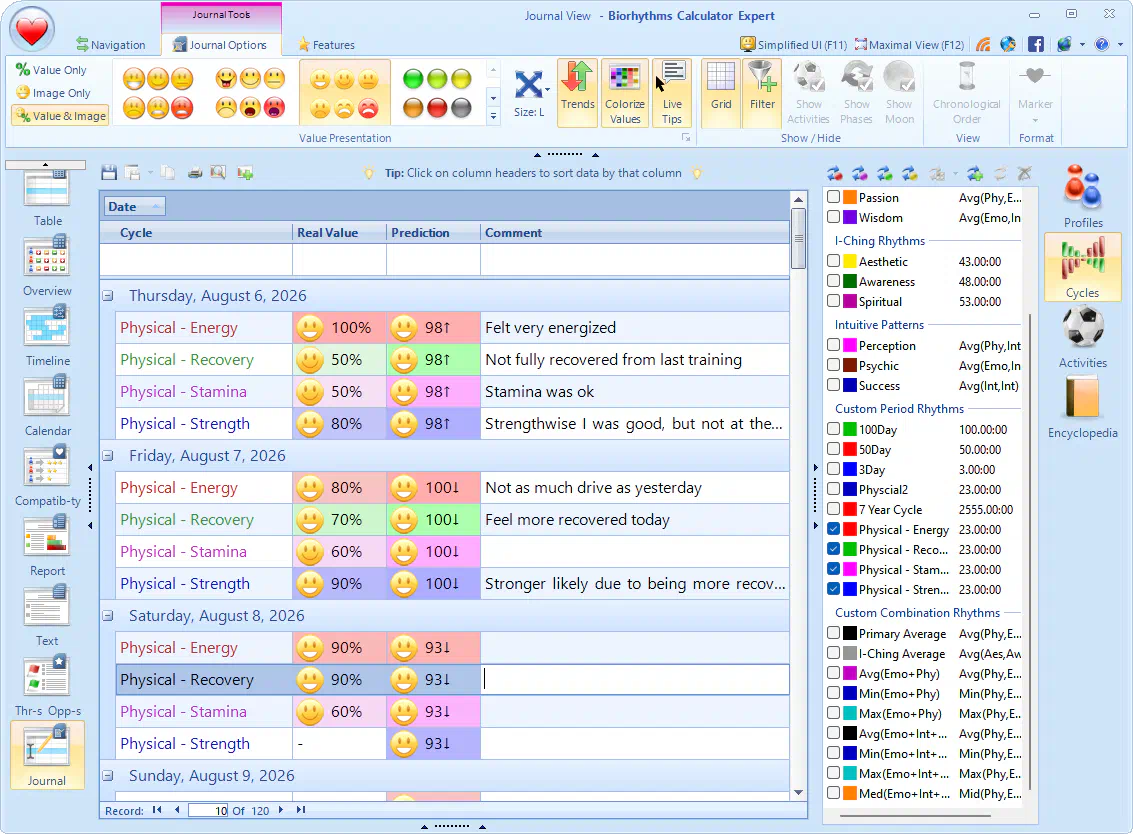
By treating the Journal as a feedback loop rather than just a daily logbook, you turn subjective feelings into actionable, data-backed training insights.
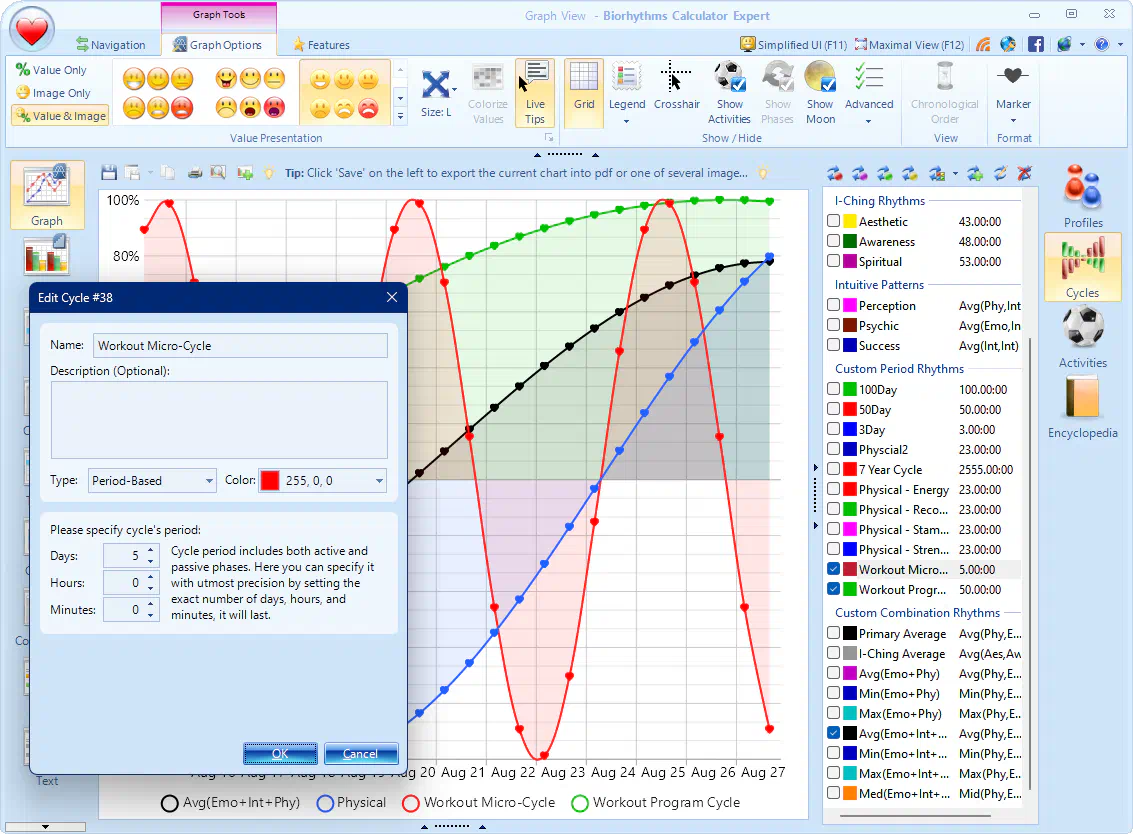
Customizing for Sport-Specific Periods
While the standard physical cycle is useful, some athletes find value in tracking custom periods that align with their sport. Biorhythms Calculator supports Custom Cycles with periods ranging from hours to years, allowing you to model microcycles, taper periods, or even sport-specific recovery windows. You can also create Combination Cycles by blending the physical, emotional, intellectual, or custom rhythms to identify optimal days for competition, where coordination, motivation, and tactical focus align.
Here are some ways to take advantage of the custom cycles:
- Periodization Mapping - Model your entire season by creating custom cycles for base building, strength phases, and taper weeks, then overlay them on your master calendar for a unified view.
- Multi-Factor Decision Making - Blend cycles to match your sport's demands: combine Physical + Intellectual for tactical sports, or Emotional + Intuitive for endurance events where mental resilience is key.
- Rapid Iteration - Test different combination formulas and threshold values over a few training blocks, then export your results to see which setup best predicts your actual performance.
Setting up these advanced cycles is straightforward once you understand your sport's rhythm. Start by defining a custom cycle that matches your training block length - such as a 14-day mesocycle or a 7-day microcycle - and let the software calculate it independently. When you need to pinpoint competition readiness, combine multiple rhythms using mathematical functions like average, minimum, or median. For example, averaging your Physical and Emotional cycles can reveal days where both stamina and mental sharpness are optimized, while using the maximum function helps you identify safe windows for high-risk drills by ensuring no single cycle drops below a critical threshold.
Elevate Your Athletic Performance with Biorhythms!
While biorhythms won't replace structured periodization or sports science, but they can provide a consistent, easy-to-follow framework for pacing your effort and respecting your body's natural recovery signals. By visualizing your biological cycles and aligning your training load accordingly, you can reduce guesswork and build a more sustainable training rhythm.
By aligning your training load with your body’s natural biological rhythms, you can train smarter, recover faster, and stay ahead by performing at your peak exactly when it counts. Whether you’re an athlete refining your personal routine or a coach and sports researcher mapping out long-term periodization, tracking these cycles turns everyday intuition into measurable advantage. Biorhythms Calculator makes it effortless to begin, offering intuitive planning tools for personal training and advanced customization that helps you and your athletes thrive.
